

It is late, you are tired, and you are wide awake. The usual advice (cut the caffeine, exercise more, keep a regular schedule) is sound, but none of it helps at two in the morning. This guide is about what to do right now, tonight. If you are exhausted but wide awake, tired but can’t sleep explains why that happens. If you fall asleep fine but wake in the middle of the night, read why you wake up at 3 a.m..
Tonight Stop trying to sleep. If you have been awake about twenty minutes, get up. Turn the clock away. Put tomorrow’s worries on paper.
Stop trying to sleep
Sleep is one of the few things that gets harder the more effort you put in. Trying to force it keeps you alert, because part of your brain stays on duty to check whether it is working yet.
So change the goal. You are no longer trying to fall asleep. You are only resting somewhere comfortable. Lying quietly with your eyes closed is still rest, and taking the pressure off is often what lets sleep arrive. If the wait to fall asleep is the main problem, slow to fall asleep covers the wind-down before bed.
If you have been awake for a while, get up
Sleep specialists commonly suggest that if you have been lying awake for what feels like twenty minutes or so, you should get out of bed. It sounds backwards, but it works for a simple reason: the longer you lie there frustrated, the more your brain learns that bed is a place for being awake and annoyed.
Go to another room, keep the lights low and do something dull and pleasant. Read a few pages of a book you already know, fold some laundry or look out of the window. Go back to bed when your eyelids feel heavy, and not before.
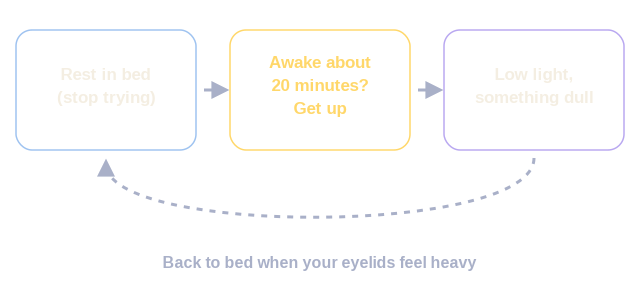 Rather than lying there frustrated, get up for a while and go back when your eyelids feel heavy.
Turn the clock away
Checking the time never helps. Every look starts the same sum (if I fall asleep now, I will get four hours) and the sum makes you more tense. Turn the clock to face the wall and put your phone face down. If you cannot stop reaching for it, see phone before bed.
Give your mind something quiet to hold
A racing mind rarely stops because you tell it to. It stops when it has something else to rest on. The best choices are things that hold a little attention without asking for any effort:
- A steady sound. Rain, a fan or a crackling fire gives your ears something constant and covers the small noises that make you listen out.
- Slow breathing. Breathe in through your nose, then out for a little longer than you breathed in. Count the breaths if it helps, and start again at one whenever you lose track.
- A place to picture. Walk through a room you know well, or imagine one you would like to be in, and fill in the details slowly.
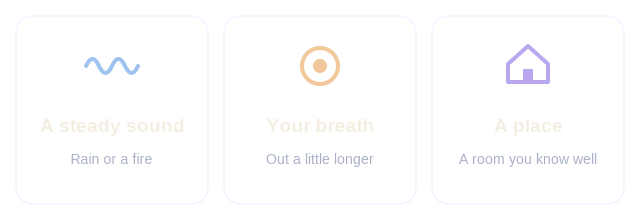 Something that holds a little attention but takes no effort.
This is the idea behind migg. Each room pairs a calm scene with a sound that plays all night, so there is something gentle to look at and listen to while sleep catches up.
Park tomorrow’s worries on paper
If the same thoughts keep coming round, write them down. A short list of what is on your mind, with one next step beside each item, tells your brain that the thought has been handled and can wait until morning. If this happens most nights, there is more on racing thoughts at night.
The next day
One bad night is uncomfortable but not dangerous. Get up at your usual time, get some daylight early and try not to nap for long. Going to bed much earlier to catch up tends to backfire, so aim for your normal bedtime instead.
When to get help
If you struggle to sleep on most nights for several weeks, or it is affecting your mood, work or safety, see a doctor. Insomnia is common and there are effective treatments. The NHS has a clear overview of insomnia and when to seek help.
This article is general information, not medical advice. If sleep problems last for weeks or affect your days, please talk to a doctor.